
www.industry-india.com
09
'26
Written on Modified on
Hybrid Renewable Capacity for Grid Reliability
Serentica Renewables and Solar Energy Corporation of India cooperate on a 600 MW firm, dispatchable renewable energy project to support peak power demand and grid stability in India.
www.serenticaglobal.com
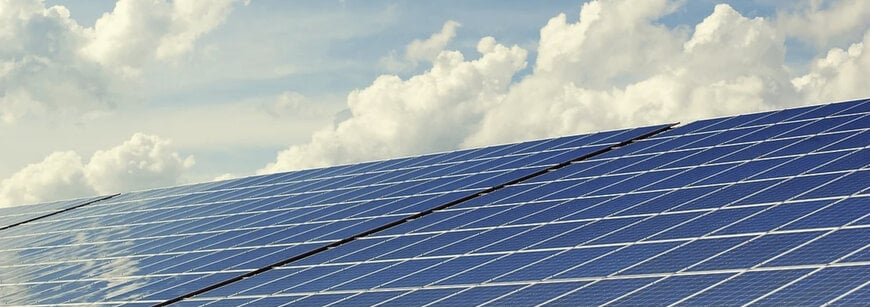
Serentica Renewables has been awarded 600 MW capacity under a firm and dispatchable renewable energy (FDRE) tender issued by Solar Energy Corporation of India (SECI). The cooperation focuses on deploying hybrid renewable generation with assured peak supply to improve grid reliability for industrial and utility-scale applications.
Context of the Cooperation
Serentica Renewables is an independent power producer focused on supplying round-the-clock renewable electricity to large commercial and industrial consumers. SECI acts as the implementing agency for national renewable energy procurement programs, structuring tenders, aggregating demand, and contracting capacity to meet grid and policy objectives.
The FDRE VII tender addresses the operational challenge of integrating variable renewable generation into a power system that requires predictable supply during peak demand periods. Cooperation was required to combine SECI’s procurement and grid-integration framework with Serentica’s capability to design, finance, and operate hybrid generation assets at scale.
Technical Solution and Responsibilities
The awarded capacity will be developed as a hybrid renewable energy system, combining solar photovoltaic generation with complementary resources such as wind power and energy storage. This configuration is designed to deliver firm, dispatchable output during predefined peak hours, as specified in the tender conditions.
SECI is responsible for tender design, power purchase agreements, and compliance with regulatory and scheduling requirements. Serentica Renewables will develop, own, and operate the generation and storage assets, managing energy forecasting, dispatch scheduling, and performance compliance. System operation relies on coordinated control of multiple generation sources to meet contracted delivery windows, rather than maximizing single-asset output.
Deployment and Integration
The project will be deployed across suitable renewable resource locations in India, with grid interconnection aligned to existing transmission infrastructure. Implementation includes phased development of generation and storage assets, followed by integration with grid scheduling and settlement mechanisms defined by Indian electricity market regulations.
Serentica will handle engineering, procurement, construction, and long-term operations, while SECI oversees contractual performance and grid coordination. Integration with digital infrastructure for forecasting and dispatch enables compliance with assured peak delivery obligations.
Applications and Use Cases
The primary application is utility-scale power supply supporting peak demand periods, particularly for industrial and commercial loads requiring predictable energy availability. The FDRE model supports grid operators by reducing reliance on fossil-based peaking plants and improving system stability through scheduled renewable dispatch.
Expected Impact
The 600 MW capacity contributes to increasing the share of renewable energy that can be treated as firm capacity within the power system. While specific performance figures are defined contractually, the technical impact lies in improved scheduling certainty, reduced variability during peak hours, and better utilization of hybrid renewable assets within the existing grid framework.
www.serenticaglobal.com
