
www.industry-india.com
30
'26
Written on Modified on
SYSTRA Advances Driverless Metro Expansion in India
Engineering support for automated metro lines in Delhi enables transition to unattended train operation and supports infrastructure upgrades for expanding urban rail networks.
www.systra.com
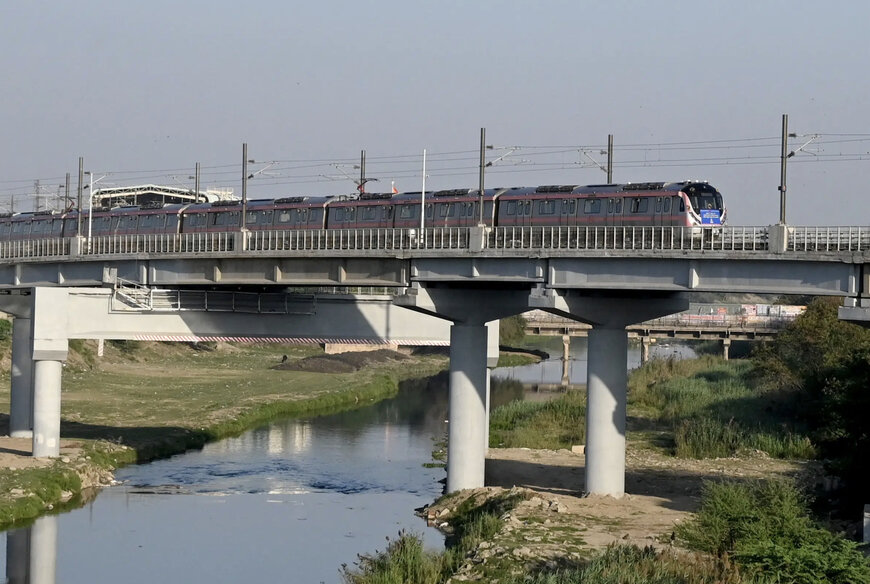
Urban rail transport, smart mobility, and metro infrastructure development are accelerating in India, with SYSTRA contributing to the expansion of driverless metro systems in Delhi. The recent inauguration of a new section of the Pink Line and an extension of the Magenta Line highlights the growing adoption of automated train operation in high-capacity urban networks.
SYSTRA has been involved in the development of metro systems across multiple Indian cities, contributing to a significant share of operational networks. In Delhi, its role has focused on enabling automation and supporting infrastructure design for lines transitioning toward driverless operation.
Transition from Semi-Automatic to Fully Automated Operation
The Magenta Line (Line 8) was designed with automation capabilities from the outset, forming the basis for its transition to higher grades of automation. Between 2020 and 2022, SYSTRA conducted a system-wide assessment to support the upgrade from GoA 2 (semi-automatic operation with onboard staff) to GoA 4 (unattended train operation).
This transition involves integrating automatic train operation systems, upgrading signalling and control frameworks, and ensuring system redundancy for safe, driverless performance. GoA 4 systems eliminate the need for onboard drivers, relying instead on centralized control and advanced monitoring systems.
Infrastructure Design for Automated Metro Systems
SYSTRA has contributed to the design of key infrastructure elements supporting automation, including track systems, electrification, and operational integration. For the ongoing Magenta Line extension under Phase IV, the company is supporting Kalpataru Power Transmission Limited (KPTL) with:
- Design validation of rigid overhead catenary systems (OCS), ensuring stable and efficient power delivery in confined metro environments
- Power supply design, critical for maintaining reliability and redundancy in automated operations
Rigid OCS systems are particularly suited for underground and high-density metro corridors, where space constraints and maintenance considerations require compact and stable electrification solutions.
Expanding Applications of Driverless Metro Technology
Driverless metro systems are increasingly adopted in densely populated urban areas where high frequency, precision scheduling, and operational efficiency are essential. Automated systems enable reduced headways, improved energy efficiency through optimized acceleration and braking, and centralized traffic management.
In Delhi, the expansion of automated lines supports increased passenger capacity while maintaining operational consistency across the network. These systems are also aligned with smart city initiatives, integrating digital monitoring, predictive maintenance, and real-time passenger information systems.
Positioning Within India’s Urban Mobility Strategy
The continued expansion of driverless metro lines reflects a broader shift toward automation in India’s public transport infrastructure. By supporting both design and system upgrades, SYSTRA contributes to the standardization of automated metro solutions across cities.
This approach enables scalable deployment of driverless technology, supporting long-term urban mobility planning while addressing challenges such as congestion, emissions, and operational efficiency in rapidly growing metropolitan regions.
Edited by Natania Lyngdoh, Induportals Editor — Adapted by AI.
www.systra.com
Expanding Applications of Driverless Metro Technology
Driverless metro systems are increasingly adopted in densely populated urban areas where high frequency, precision scheduling, and operational efficiency are essential. Automated systems enable reduced headways, improved energy efficiency through optimized acceleration and braking, and centralized traffic management.
In Delhi, the expansion of automated lines supports increased passenger capacity while maintaining operational consistency across the network. These systems are also aligned with smart city initiatives, integrating digital monitoring, predictive maintenance, and real-time passenger information systems.
Positioning Within India’s Urban Mobility Strategy
The continued expansion of driverless metro lines reflects a broader shift toward automation in India’s public transport infrastructure. By supporting both design and system upgrades, SYSTRA contributes to the standardization of automated metro solutions across cities.
This approach enables scalable deployment of driverless technology, supporting long-term urban mobility planning while addressing challenges such as congestion, emissions, and operational efficiency in rapidly growing metropolitan regions.
Edited by Natania Lyngdoh, Induportals Editor — Adapted by AI.
www.systra.com
