
www.industry-india.com
22
'26
Written on Modified on
Wi-SUN Modules Support India Smart Grid Expansion
Silicon Labs powers Comminent’s shipment of 500,000 communication modules for secure mesh networking in smart metering infrastructure.
www.silabs.com
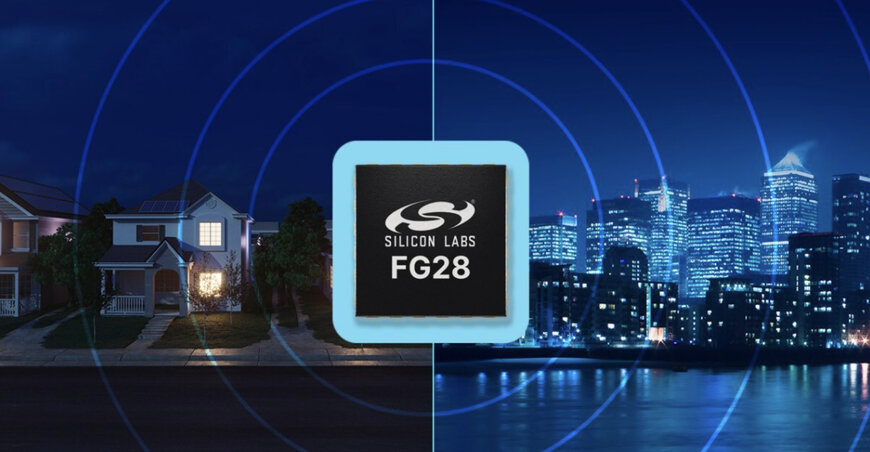
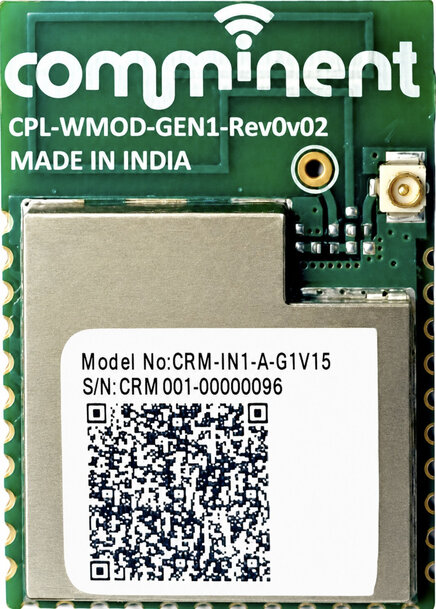
Comminent and Silicon Labs have announced shipment of more than 500,000 Wi-SUN communication modules designed for India’s smart meter deployment programs. The modules, based on Silicon Labs’ EFR32FG28 Wireless SoC, support wireless mesh networking for Advanced Metering Infrastructure (AMI) and align with India’s expanding smart grid modernization initiatives under the Revamped Distribution Sector Scheme (RDSS).
The deployment reflects increasing adoption of utility-grade RF mesh networking technologies as energy providers seek scalable communication systems capable of supporting millions of connected endpoints.
Wi-SUN standardization supports large-scale smart metering networks
India’s Bureau of Indian Standards (BIS) has adopted the Wi-SUN Field Area Network (FAN) specification as the national standard IS 18010 for smart meter RF communication networks, based on IEEE 2857-2021 and ISO/IEC/IEEE 32857:2026. Standardization is intended to improve interoperability and enable secure communication across large distributed energy networks.
Wi-SUN technology is increasingly used in smart grids because mesh architectures allow connected devices to relay data through neighbouring nodes, improving resilience and maintaining connectivity if individual links fail. Such self-healing capabilities are important for utility networks spanning dense urban environments and geographically dispersed regions.
Dual-band wireless architecture targets utility deployment requirements
Comminent’s communication modules use the EFR32FG28 Wireless SoC, which combines Sub-GHz radio technology with 2.4 GHz Bluetooth Low Energy connectivity. The Sub-GHz component is designed for long-range communication in demanding RF environments, while Bluetooth Low Energy supports local connectivity and deployment flexibility.
The platform incorporates a multi-core architecture with dedicated ARM cores supporting application processing, radio operations and edge intelligence functions. According to the companies, this configuration is intended to improve mesh networking performance in high-density deployments.
Security architecture addresses infrastructure protection requirements
The EFR32FG28 integrates Secure Vault technology with PSA Level 3 certification, including hardware-based cryptographic acceleration, anti-tamper capabilities and secure key storage. Security features have become increasingly significant in utility infrastructure as smart meter networks expand and connect larger volumes of operational data.
Protection against unauthorized access and device compromise is considered critical for Advanced Metering Infrastructure because vulnerabilities may affect billing systems, grid visibility and operational continuity.
Large-scale deployments expand beyond domestic energy networks
The companies state the deployed communication modules support future-ready Wi-SUN networks intended to scale to millions of connected endpoints. Following deployment experience in India, Comminent plans expansion into additional smart grid markets including the United States, Japan and regions investing in energy transition infrastructure.
As utilities increasingly adopt digital monitoring and distributed energy systems, communication technologies capable of supporting high device density and long operational lifecycles are becoming a foundational element of smart grid architecture.
Edited by Natania Lyngdoh, Induportals editor, assisted by AI.
www.silabs.com
