
www.industry-india.com
01
'26
Written on Modified on
JBT Marel supports the modernization of India’s poultry industry
JBT Marel is introducing integrated processing, digitalization, and local service support to assist Indian poultry processors in modernizing their operations.
marel.com
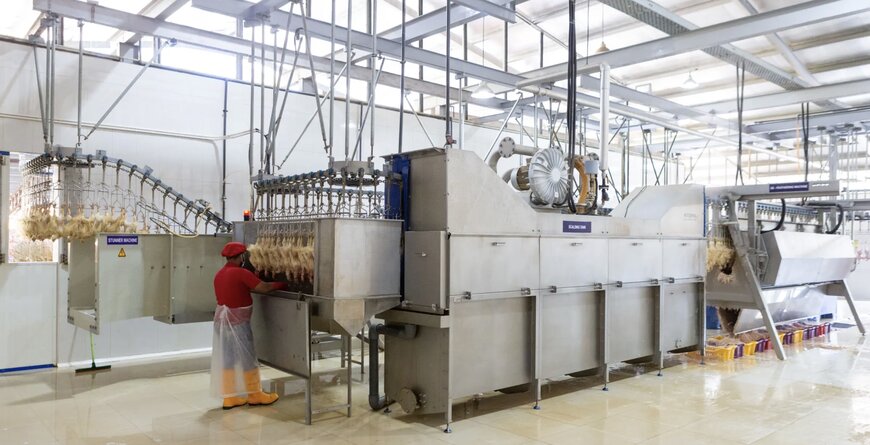
JBT Marel is providing integrated poultry processing solutions to support the transition from traditional wet markets to industrialized processing in India. With a national population of 1.47 billion, the regional market is shifting toward processed options due to urbanization, changing consumption habits among younger generations, and an increasing number of dual-working households.
End-to-End Processing and Value Chain Management
The technical framework covers the entire poultry value chain from live bird logistics to finished retail and food service products. The integrated pipeline incorporates automated systems for live bird handling, stunning, killing, scalding, plucking, evisceration, and chilling. Within the evisceration stage, the equipment accommodates variations in bird size, weight, and species—including broilers, local breeds, and layers—to optimize product yield and manage operational costs.
Food Safety Standards and Commercial Channels
The processing machinery is engineered to meet international sanitation, water usage, and operational safety standards. This compliance enables regional processors to fulfill the strict sourcing requirements of Quick Service Restaurant (QSR) chains such as KFC, McDonald's, and Burger King, alongside organized retail supermarkets like Reliance Smart, DMart, and Star Bazaar. The systems also support high-volume production for the institutional hotel, restaurant, and catering (Horeca) sector, including chains like Taj, Marriott, and ITC, as well as Direct-to-Consumer (D2C) digital platforms such as Licious and FreshToHome.
Digital Readiness and Resource Optimization
The automation portfolio provides scalable digital integration ranging from elementary inventory control software to fully connected factory ecosystems. These data networks deliver complete end-to-end traceability and real-time performance monitoring across manufacturing lines to adapt to changing market expectations. Furthermore, the process engineering focuses on balancing strict hygiene criteria with optimized water consumption, addressing specific constraints in regions where water availability is limited.
Local Adaptation and Lifecycle Services
To satisfy regional market preferences without complete machinery redesigns, the systems allow for localized adjustments to machine settings, equipment layouts, software configurations, and tailored production protocols, such as halal execution. Technical lifecycle support is managed by local service engineers who provide on-site and remote technical assistance, equipment health checks, operator training, and preventive maintenance schedules backed by access to genuine spare parts.
Edited by Romila DSilva, Induportals Editor, with AI assistance.
www.jbtmarel.com
