
www.industry-india.com
30
'26
Written on Modified on
Upgrading reheating furnace control in India
Fives to upgrade the Level-1 control systems of two reheating furnaces at Jindal Steel's Patratu plant.
www.fivesgroup.com
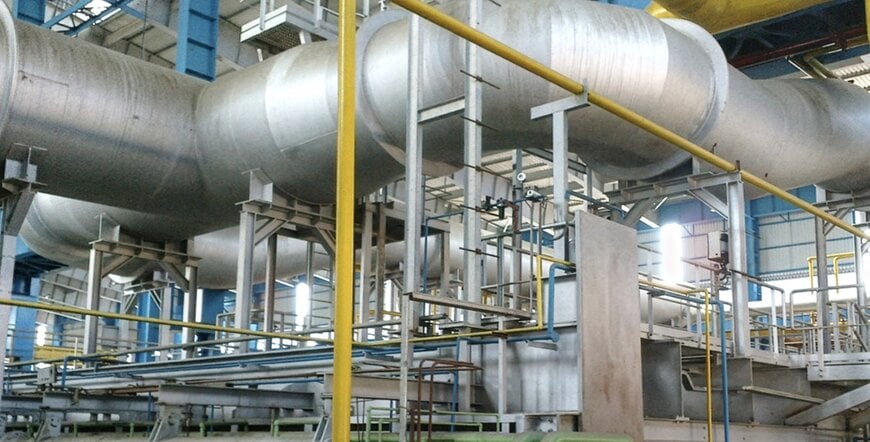
Jindal Steel has contracted Fives to modernize the Level-1 control systems of two reheating furnaces at its Patratu plant in Balkudra, India. The project aims to optimize line operating speeds to support India's construction and infrastructure sectors.
Control System Modernization and Hardware Upgrades
The project encompasses upgrading the Level-1 control systems of two Stein Digit@l Furnace® units originally supplied by Fives, featuring annual capacities of 160 and 200 metric tonnes, respectively.
Key technical improvements include:
- Latest-generation software and control system upgrades
- Modernized PLC hardware and operating platforms
- High-speed optical communication network
- New engineering and operator stations
- Multiple fuel options availability, including heavy furnace oil, light diesel oil, cold tar oil, and producer gas
- Improvements to material-handling operations
Operational Reliability and Fuel Flexibility
The upgraded control architecture accommodates multiple fuel options to provide greater fuel flexibility across furnace operations.
Through these enhancements, Jindal Steel expects to achieve improved process reliability, faster response times, and reduced maintenance requirements. The project features a short implementation schedule and a limited shutdown period designed to achieve operational performance gains while minimizing production downtime.
Additional Context
This section details technical specifications not included in the original news release.
Level-1 control systems in industrial reheating furnaces govern real-time field-level automation, execution, and safety interlocking. These architectures integrate Programmable Logic Controllers (PLCs) and Input/Output (I/O) modules to interface directly with field instrumentation, including thermocouples, pressure transmitters, optical pyrometers, flow meters, motorized control valves, and air-fuel ratio actuators. High-speed optical communication networks, such as fiber-optic Ethernet fieldbuses, prevent electromagnetic interference (EMI) prevalent in high-power industrial melt shops and rolling mills, ensuring deterministic transmission of sensor telemetry and control commands across distributed nodes.
Reheating furnaces heat steel billets, blooms, or slabs to plastic deformation temperatures, typically between 1,100°C and 1,250°C, prior to hot rolling operations. Modern digital combustion control systems regulate multi-zone thermal profiles, adjusting fuel-air stoichiometry to optimize heat transfer efficiency, lower fuel consumption, and reduce oxide scale formation on steel surfaces. Multi-fuel burner management systems utilize automated control algorithms to modulate valve positions and air-fuel ratios based on fuel calorific values, viscosity, and line pressure, maintaining stable furnace temperatures during fuel switching without disrupting continuous heating cycles.
Edited by Romila DSilva, Induportals Editor, with AI assistance.
The upgraded control architecture accommodates multiple fuel options to provide greater fuel flexibility across furnace operations.
Through these enhancements, Jindal Steel expects to achieve improved process reliability, faster response times, and reduced maintenance requirements. The project features a short implementation schedule and a limited shutdown period designed to achieve operational performance gains while minimizing production downtime.
Additional Context
This section details technical specifications not included in the original news release.
Level-1 control systems in industrial reheating furnaces govern real-time field-level automation, execution, and safety interlocking. These architectures integrate Programmable Logic Controllers (PLCs) and Input/Output (I/O) modules to interface directly with field instrumentation, including thermocouples, pressure transmitters, optical pyrometers, flow meters, motorized control valves, and air-fuel ratio actuators. High-speed optical communication networks, such as fiber-optic Ethernet fieldbuses, prevent electromagnetic interference (EMI) prevalent in high-power industrial melt shops and rolling mills, ensuring deterministic transmission of sensor telemetry and control commands across distributed nodes.
Reheating furnaces heat steel billets, blooms, or slabs to plastic deformation temperatures, typically between 1,100°C and 1,250°C, prior to hot rolling operations. Modern digital combustion control systems regulate multi-zone thermal profiles, adjusting fuel-air stoichiometry to optimize heat transfer efficiency, lower fuel consumption, and reduce oxide scale formation on steel surfaces. Multi-fuel burner management systems utilize automated control algorithms to modulate valve positions and air-fuel ratios based on fuel calorific values, viscosity, and line pressure, maintaining stable furnace temperatures during fuel switching without disrupting continuous heating cycles.
Edited by Romila DSilva, Induportals Editor, with AI assistance.
