
www.industry-india.com
18
'26
Written on Modified on
100.8 MW Onshore Wind Farm Commissioned in Maharashtra
Tata Power Renewable Energy commissioned 28 SG 3.6-145 turbines at Ausa, adding a monopole EHV grid link for Mumbai distribution.
www.tatapower.com
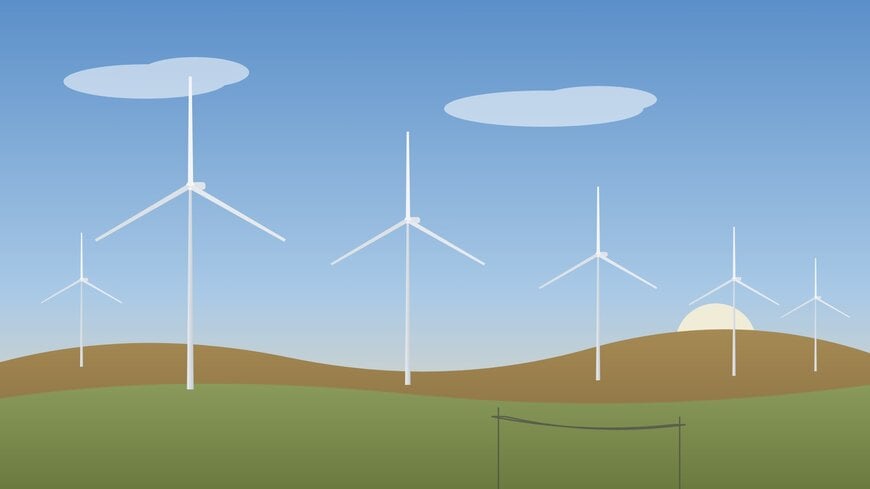
Tata Power Renewable Energy Limited (TPREL), a subsidiary of The Tata Power Company Limited, has commissioned a 100.8 MW wind project in Ausa, in the Latur district of Maharashtra. The plant supplies renewable electricity to Tata Power Mumbai Distribution (TPC-D) and is expected to generate around 308 million units (kWh) per year.
Renewable Supply for Urban Power Distribution
Large distribution utilities need growing volumes of clean, predictable generation to meet demand and emissions targets. The Ausa project addresses this by feeding wind power directly into the supply portfolio serving Mumbai. TPREL estimates that the annual output will avoid approximately 252,560 tonnes of CO2 emissions, equivalent to about 0.82 kg of CO2 per kWh displaced, in line with the carbon intensity of a coal-dominated grid.
Turbine Technology and Plant Configuration
The wind farm comprises 28 horizontal axis wind turbine generators of the SG 3.6-145 model. Following the usual naming convention for this platform, each unit is rated at 3.6 MW with a rotor diameter of 145 m, which together account for the 100.8 MW installed capacity. Large rotors relative to generator rating increase the swept area and energy capture at moderate wind speeds, a common design choice for inland sites in India.
Based on the stated output, the project corresponds to a capacity factor of roughly 35 percent, meaning the turbines are expected to deliver about a third of their theoretical maximum annual energy.
Grid Connection Redesigned to Monopole EHV Line
The main engineering challenge arose during construction, when the grid connectivity plan was revised and the extra-high-voltage (EHV) connection was changed from an underground cable to an overhead line on monopoles. Monopole structures use a single tubular steel pole instead of a lattice tower, reducing the land footprint along the route but requiring different foundation design, procurement and erection methods.
The change introduced substantial design and execution complexity and was the first monopole installation carried out by TPREL's Wind Project Execution Division. According to the company, the team integrated the revised configuration without affecting the overall project schedule.
Results and Renewable Portfolio Growth
With the Ausa project in service, TPREL's total utility-scale renewable capacity has reached 12.1 GW. Of this, 7.3 GW is operational, comprising 5.9 GW of solar and 1.4 GW of wind, while the remaining 4.8 GW is at various stages of implementation. The addition increases the share of wind in the portfolio, which complements solar generation by producing power at different times of day and across seasons.
Edited by Natania Lyngdoh, Induportals editor, with AI assistance.
www.tatapower.com
