
www.industry-india.com
13
'26
Written on Modified on
Driverless Rolling Stock for High-Density Urban Rapid Transit
Alstom commences revenue service of driverless Metropolis trainsets on Corridor 4 of the Chennai Metro Phase II network.
www.alstom.com
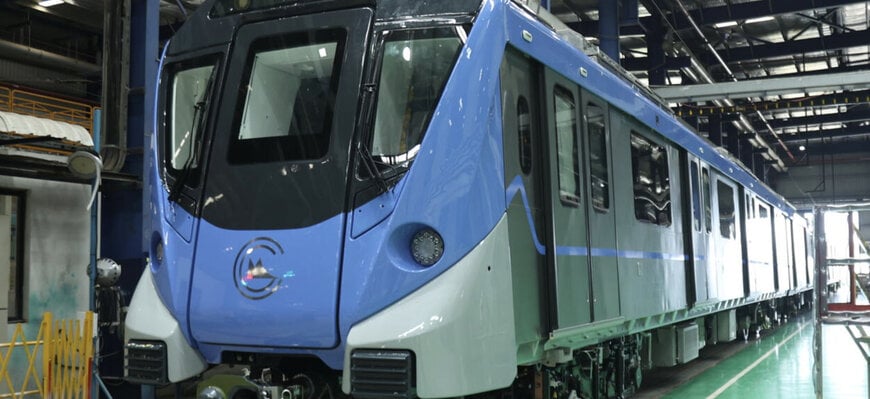
Metropolitan transit authorities face intense gridlock, carbon emissions, and throughput constraints as urban populations expand, requiring high-frequency mass transit systems capable of operating safely without manual trackside intervention. To resolve these urban mobility challenges, Alstom deployed its fully driverless Metropolis trainsets into passenger revenue service on Corridor 4 of Chennai Metro Phase II, expanding automated rail capacity across the metropolitan region in partnership with Chennai Metro Rail Limited.
Automation Demands in High-Capacity Urban Transit Networks
Rapidly expanding urban centers require mass transit networks that maximize route frequency, minimize dwell intervals, and maintain strict operational safety margins. Conventional manually operated rail systems are constrained by operator shift scheduling, human reaction latency, and physical braking variances, limiting minimum operational headways between successive trains.
To overcome throughput bottlenecks along dense municipal corridors, modern transit networks implement unattended train operations. Removing manual driving interfaces enables transit operators to deploy continuous, algorithm-governed acceleration profiles, optimize power regeneration during deceleration, and dynamically regulate headway schedules to meet shifting peak-hour passenger volumes.
Corridor Infrastructure and Fleet Architecture
The deployment covers the 26-kilometer Corridor 4 alignment, connecting Poonamallee Bypass to Light House across 28 stations, comprising 18 elevated and 10 underground stops. The transit line establishes an east-west transit artery serving residential, commercial, and administrative zones across a metropolitan area of over 11 million residents.
The operational fleet comprises 36 three-car Metropolis trainsets, totaling 108 individual rail cars. Configured for Grade of Automation 4 unattended train operation, the rolling stock operates at service speeds up to 80 km/h. Awarded in 2023 with a valuation of 124 million euros, the project contract encompasses engineering design, rolling stock manufacturing, system supply, integration testing, system commissioning, and operator staff training. Delivery of the 36th and final trainset concludes by the end of October 2026.
Engineering Mechanisms, Vehicle Dynamics, and Commuter Safety
Each three-car formation provides a passenger capacity of up to 1,000 riders. The vehicle electrical architecture integrates regenerative electro-dynamic braking systems, capturing kinetic deceleration energy and returning power to the third-rail or overhead electrification grid to lower net network energy consumption.
Vehicle safety and environmental control subsystems include:
- Real-time closed-circuit television monitoring and intelligent surveillance architectures integrated directly into passenger cars.
- Front and end emergency evacuation egress doors designed for rapid tunnel and elevated guideway evacuations.
- Military-grade cybersecurity protocols safeguarding onboard train control and management systems from external network intrusion.
- Dedicated priority accessibility allocations, including specialized areas for mobility-impaired passengers and a designated women's section occupying two-thirds of an entire car.
- Dynamic visual and acoustic passenger information displays linked to central dispatch control.
Domestic Manufacturing and Local Value Chain Integration
System development and engineering occurred at Alstom's rolling stock and digital rail engineering center of excellence in Bengaluru, Karnataka. Physical structural assembly, carbody welding, electrical harness integration, and dynamic testing were executed at the Sri City manufacturing facility in Andhra Pradesh.
The supplier previously delivered 208 cars, signaling networks, and electrical power distribution packages for the 54-kilometer Chennai Metro Phase I project across Corridors I and II. Production is also initiating at Sri City on an additional 96 driverless Metropolis cars (32 trainsets) contracted in 2025 for subsequent Chennai Metro deployment phases.
The commercial service launch occurred in the presence of Prime Minister of India Narendra Modi, formally inaugurating passenger operations across the Corridor 4 alignment.
Additional Context:
This section details technical specifications and competitive benchmarking not included in the original product announcement.
The rollout of Grade of Automation 4 rolling stock in Chennai aligns with the operational guidelines set by the International Association of Public Transport (UITP) under standard IEC 62290, which defines automated urban guided transport systems. Grade of Automation 4 eliminates onboard operating personnel, requiring communications-based train control systems that continuously exchange vehicle location, speed curves, and movement authorities via redundant radio networks between train-borne computers and wayside zone controllers.
Within the Indian mass transit manufacturing landscape, Alstom competes directly with rolling stock manufacturers including Bharat Earth Movers Limited (BEML), Titagarh Rail Systems, and Hyundai Rotem. While Hyundai Rotem supplied the initial trainsets for Delhi Metro's early expansions and BEML manufactures standard-gauge driverless cars for Mumbai Metro Line 2 and Line 7, the Sri City manufacturing plant serves as an established export and domestic hub. Alstom's platform utilizes standard stainless-steel or lightweight aluminum monocoque structures, competing against modern metro configurations from Siemens Mobility (Inspiro platform) and CRRC Corporation. Unlike legacy Phase I lines that operated under Grade of Automation 2 (semi-automated train operation with drivers handling door closures and departure initiation), Grade of Automation 4 systems reduce turn-around latency at terminal stations by executing automatic track switches and reversals without manual cab transitions.
Edited by Natania Lyngdoh, Induportals editor, with AI assistance.
www.alstom.com
System development and engineering occurred at Alstom's rolling stock and digital rail engineering center of excellence in Bengaluru, Karnataka. Physical structural assembly, carbody welding, electrical harness integration, and dynamic testing were executed at the Sri City manufacturing facility in Andhra Pradesh.
The supplier previously delivered 208 cars, signaling networks, and electrical power distribution packages for the 54-kilometer Chennai Metro Phase I project across Corridors I and II. Production is also initiating at Sri City on an additional 96 driverless Metropolis cars (32 trainsets) contracted in 2025 for subsequent Chennai Metro deployment phases.
The commercial service launch occurred in the presence of Prime Minister of India Narendra Modi, formally inaugurating passenger operations across the Corridor 4 alignment.
Additional Context:
This section details technical specifications and competitive benchmarking not included in the original product announcement.
The rollout of Grade of Automation 4 rolling stock in Chennai aligns with the operational guidelines set by the International Association of Public Transport (UITP) under standard IEC 62290, which defines automated urban guided transport systems. Grade of Automation 4 eliminates onboard operating personnel, requiring communications-based train control systems that continuously exchange vehicle location, speed curves, and movement authorities via redundant radio networks between train-borne computers and wayside zone controllers.
Within the Indian mass transit manufacturing landscape, Alstom competes directly with rolling stock manufacturers including Bharat Earth Movers Limited (BEML), Titagarh Rail Systems, and Hyundai Rotem. While Hyundai Rotem supplied the initial trainsets for Delhi Metro's early expansions and BEML manufactures standard-gauge driverless cars for Mumbai Metro Line 2 and Line 7, the Sri City manufacturing plant serves as an established export and domestic hub. Alstom's platform utilizes standard stainless-steel or lightweight aluminum monocoque structures, competing against modern metro configurations from Siemens Mobility (Inspiro platform) and CRRC Corporation. Unlike legacy Phase I lines that operated under Grade of Automation 2 (semi-automated train operation with drivers handling door closures and departure initiation), Grade of Automation 4 systems reduce turn-around latency at terminal stations by executing automatic track switches and reversals without manual cab transitions.
Edited by Natania Lyngdoh, Induportals editor, with AI assistance.
www.alstom.com
