
www.industry-india.com
04
'26
Written on Modified on
Siemens delivers Pune Metro Line 3 with advanced rail technologies
The 23-kilometre corridor connects Hinjewadi and Shivajinagar, combining CBTC signalling, electrification and integrated systems to halve commuter travel times.
www.siemens.com
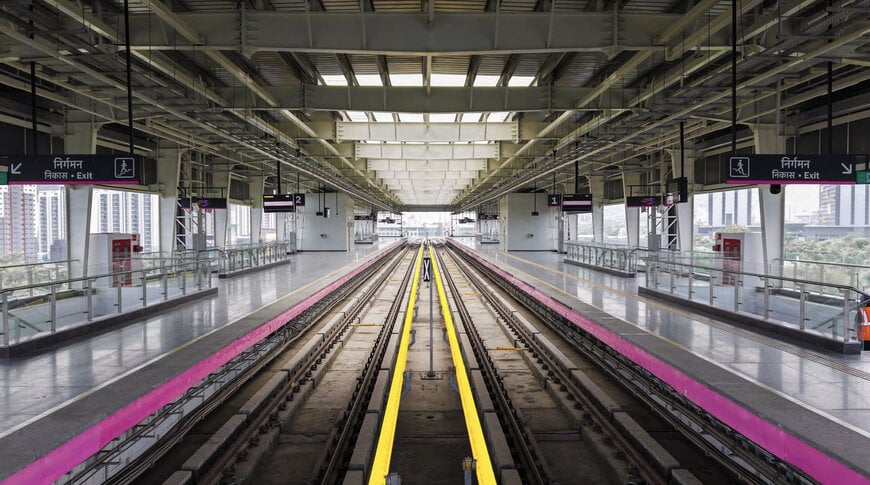
Siemens, together with TRIL Urban Transport Private Limited (a Tata Group company) and other consortium partners, completed the turnkey delivery of rail automation, electrification, and support systems for the 23-kilometer elevated Pune Metro Line 3 corridor between Hinjewadi and Shivajinagar. The project executed commercial passenger operations across the network under a Public-Private Partnership framework developed per India’s New Metro Rail Policy.
Technical Architecture and Operational Automation
The consortium operated under a concession awarded by the Pune Metropolitan Region Development Authority to construct, finance, and operate the transit link through a joint venture structure. Within this collaborative framework, Siemens supplied core systems integration, telecommunications, depot workshop equipment, and a 10-year full-service maintenance program covering signaling and traction power assets.
Train movement along the 23-station elevated alignment utilizes the Siemens Trainguard MT Communications-Based Train Control system. The infrastructure operates under Grade of Automation 2 (GoA2) parameters, which automate acceleration, speed regulation, and programmed station stopping while maintaining driver oversight. Continuous bidirectional radio communication between trackside equipment and onboard controllers calculates dynamic safety envelopes and target braking curves, enabling reduced headway intervals and real-time headway regulation. The system architecture supports modular upgrades to Grade of Automation 4 (GoA4) driverless operation without replacing core trackside hardware.
Power Distribution and Subsystem Integration
Traction power distribution utilizes a 750V DC third-rail network instead of overhead catenary equipment, containing the physical clearance envelope of the elevated viaduct. Substation transformers and switchgear distribute direct current to contact collector shoes on the 22-train fleet, maintaining voltage stability during simultaneous multi-train acceleration phases.
The telecommunications infrastructure integrates multiple operational subsystems into a shared data backbone. This network coordinates Terrestrial Trunked Radio (TETRA) voice and data channels for vehicle-to-ground dispatching, closed-circuit television monitoring, digital station management platforms, passenger information displays, and access control hardware. Integration protocols ensure continuous diagnostic telemetry streams from train-borne subcomponents to central maintenance crews, supporting predictive asset management throughout the maintenance lifecycle.
Transit Capacity and Corridor Performance
The transit corridor links residential and industrial centers to alleviate road congestion between the Hinjewadi technology cluster and the central Shivajinagar transport interchange. Operational modeling confirms that continuous train regulation and dedicated grade separation reduce one-way travel times by 50 percent compared to surface road transit.
Soulier, Executive Vice President Turnkey Business at Siemens Mobility, confirmed that combining integration and project management capabilities with the CBTC system enables a reduction in travel time by nearly 50 percent, delivering connectivity across the corridor.
Stabilized headways and automated braking profiles lower traction energy consumption per passenger-kilometer while maintaining throughput across peak transit periods.
Edited by Natania Lyngdoh, Induportals editor, with AI assistance.
www.siemens.com
