
www.industry-india.com
17
'26
Written on Modified on
High-Efficiency Autonomous Edge Data Centers for Decentralized Infrastructure
Through a strategic partnership with 2CRSi, Valeo is deploying an outdoor immersion-cooled server solution to support India’s expanding 5G and artificial intelligence networks.
www.valeo.com
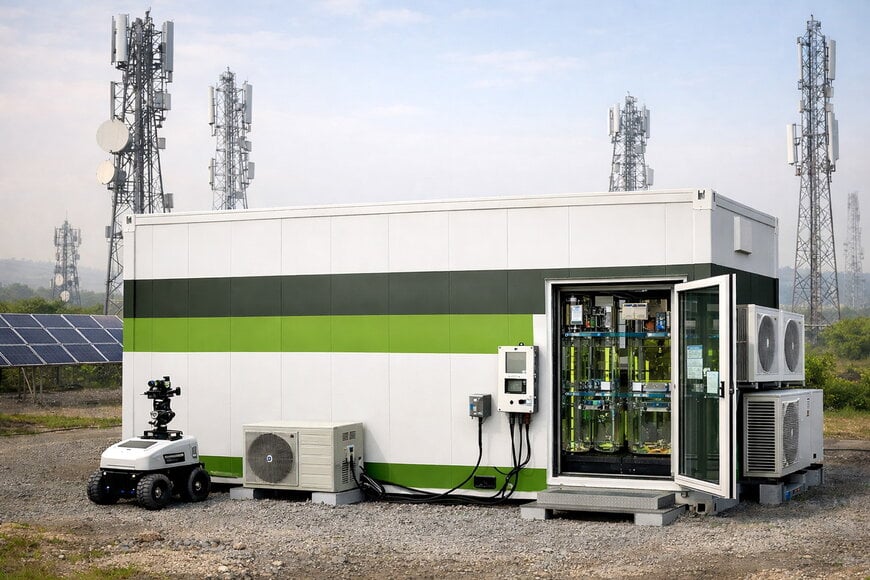
The integration of automotive-grade thermal management with high-performance server architecture has resulted in a standalone edge data center designed for extreme environmental conditions. Engineered for decentralized digital infrastructure, this technology provides a water-free cooling alternative for telecommunications operators deploying hardware in regions with high ambient temperatures and limited facility resources.
Thermal Resilience in Harsh Environments
Traditional data centers require controlled indoor environments, including complex air conditioning (CRAC) units, chillers, and dedicated buildings. The system developed by Valeo and 2CRSi operates as a compact, autonomous unit capable of functioning in ambient temperatures exceeding 50°C. By leveraging Valeo’s expertise in the automotive data ecosystem, the hardware is protected against high humidity, heavy dust, and flood-prone conditions, reaching reliability standards typically reserved for vehicle components.
This durability is achieved through dielectric immersion cooling, where servers are completely submerged in a non-conductive, non-toxic liquid. This fluid absorbs heat directly from the electronic components and transfers it to the environment without the need for water consumption. The mechanism maintains chip temperatures at a maximum of 75°C, even when operating at a 1 kW+ capacity in 50°C ambient heat.
Quantifiable Operational Efficiency
The transition from conventional air cooling to an immersion-based architecture addresses critical sustainability and cost metrics. Traditional edge sites typically operate with an annualized Power Usage Effectiveness (PUE) of approximately 1.6. The Valeo–2CRSi solution achieves a PUE of less than 1.1, representing a 30% to 35% reduction in total infrastructure energy consumption.
For a 1.5 kW IT load operating in outdoor conditions—such as those found in Bengaluru—this efficiency translates to an annual energy saving of 6 to 8 MWh. Furthermore, the removal of mechanical cooling systems and water loops reduces the infrastructure footprint by up to 85%, significantly lowering Capital Expenditure (CAPEX) and Operating Expenditure (OPEX).
Strategic Application and Industrialization
Unveiled at the AI Impact Summit in New Delhi in February 2026, the technology is positioned to support the rapid rollout of 5G services and distributed AI inference. Because the units are maintenance-free and require no water supply, they can be deployed directly at the base of telecom antennas or in remote locations where water stress is a critical constraint.
The industrialization process for these units is scheduled to begin within India throughout 2026, with a full commercial launch planned for November 2026. This local production strategy aligns with the growth of the digital supply chain, ensuring that high-performance computing can be scaled to meet the low-latency requirements of modern mobile networks.
Comparative Technical Standards
Compared to standard IT infrastructure not originally engineered for outdoor use, this automotive-grade system provides a structural advantage in "all-terrain" IT. While comparable air-cooled ruggedized PCs exist for industrial use, they often rely on passive heat sinks that limit high-power GPU workloads. In contrast, this immersion-cooled system supports high-density AI processing while maintaining a 91% reduction in water consumption and a 39% reduction in carbon emissions compared to traditional air-cooled facilities.
www.valeo.com
